

In Brief: Bankruptcy does not happen overnight. Warning signs often emerge months in advance – delayed filings, growing litigation, and operational defaults. Yet most businesses only react when insolvency hits the headlines. Business monitoring tools like Probe42 provide bankruptcy alerts by tracking financial filings, litigation data, and compliance lapses in real time. These early signals empower banks, investors, and corporations to act before risks escalate into losses.
====
Bankruptcy is one of the most severe outcomes of corporate financial stress. It signals not only a business’s failure but also the potential for heavy losses among its lenders, suppliers, and investors. For risk and compliance teams, the challenge is not understanding bankruptcy after it happens but detecting the signals before it is too late.
In India, bankruptcy filings under the Insolvency and Bankruptcy Code (IBC) have surged, making it vital for institutions to monitor early indicators. Traditional checks, like balance sheet reviews or annual reports, are too static. What businesses need today is real-time monitoring that alerts them to financial and compliance distress as it unfolds.
Understanding Bankruptcy Alerts
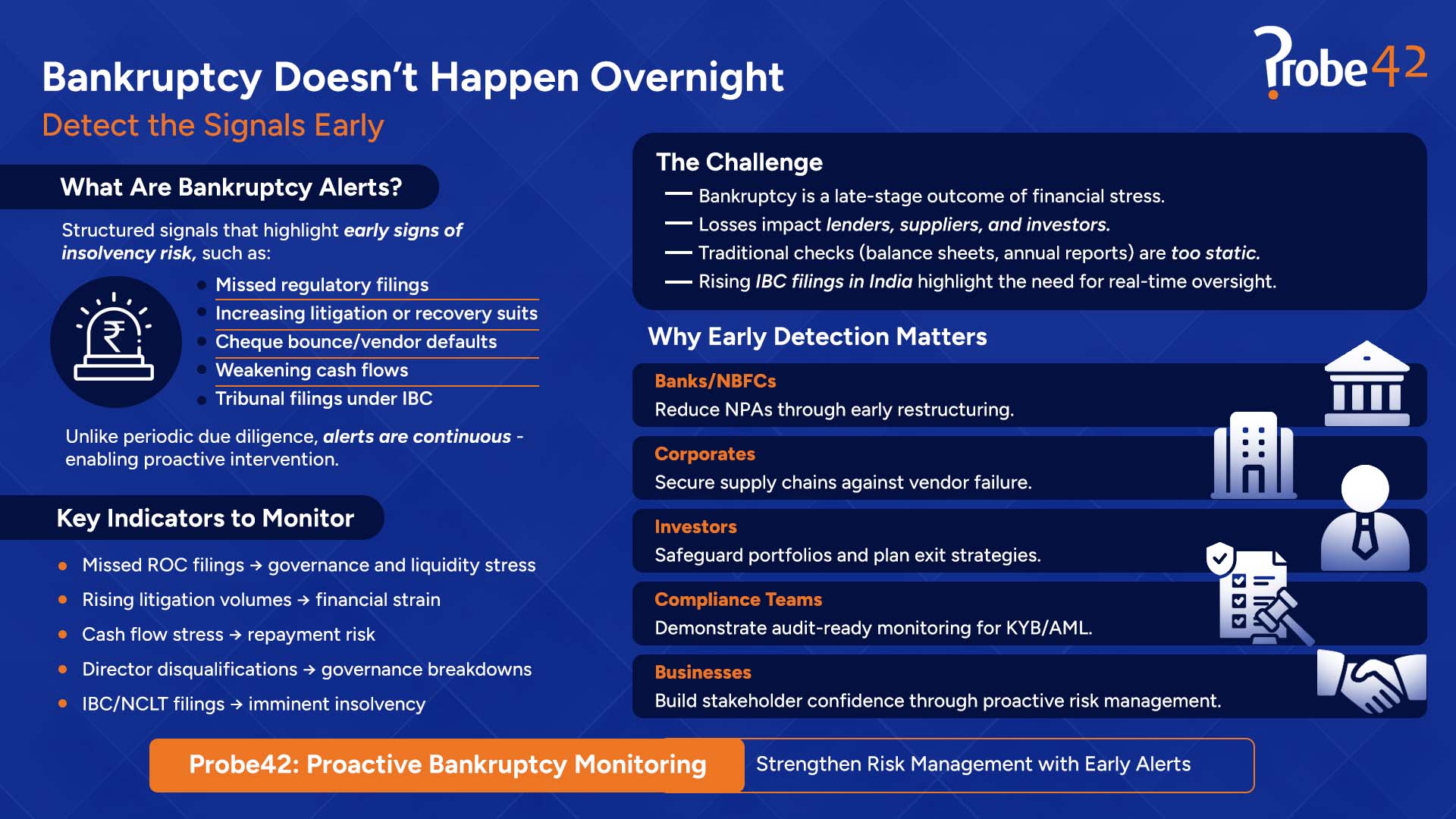
Bankruptcy alerts are structured signals that flag companies showing early signs of insolvency risk. These alerts combine multiple data points, such as:
- Missed regulatory filings
- Ongoing recovery litigation
- Cheque bounce cases or vendor defaults
- Weakening financials in balance sheets and cash flows
Unlike one-off due diligence checks, alerts are continuous, giving stakeholders a proactive way to spot and act on red flags.
Why Early Detection Matters
1. Reducing Credit Losses:
For banks and NBFCs, bankruptcy alerts are a critical line of defence against loans turning into non-performing assets (NPAs). Early warning signals, such as missed filings or litigation surges, allow institutions to step in with restructuring, additional collateral, or revised repayment plans. Acting proactively often means the difference between recovering dues and writing off loans.
2. Protecting Supply Chains:
Corporations rely heavily on vendors and partners to keep operations running smoothly. If a key supplier collapses, production delays and cost overruns can ripple through the entire value chain. Bankruptcy alerts enable businesses to identify vulnerable vendors in advance, giving them time to diversify suppliers, renegotiate contracts, or adjust inventory strategies.
3. Safeguarding Investments:
For investors, bankruptcy is not just about financial loss; it can also mean reputational damage. Early alerts help investors flag portfolio companies that are showing stress signals and intervene before valuations erode. They can also inform exit strategies, helping funds reallocate capital to healthier opportunities while avoiding distressed assets.
4. Ensuring Regulatory Compliance:
Regulators increasingly expect institutions to demonstrate robust risk monitoring systems. Having structured bankruptcy alerts shows that an organisation is actively tracking financial health and compliance gaps across its counterparties. This creates an audit-ready trail that satisfies KYB, AML, and other regulatory requirements while reducing the risk of penalties.
5. Building Market Confidence:
Businesses that demonstrate the ability to anticipate and mitigate risks inspire greater trust among stakeholders. Clients, investors, and lenders prefer to work with organisations that are proactive rather than reactive. By using bankruptcy alerts, companies strengthen their credibility and market reputation, positioning themselves as reliable partners even in volatile times.
Key Bankruptcy Indicators to Monitor
1. Missed ROC Filings:
Consistent delays in submitting annual returns, financial statements, or other statutory filings are often the first visible cracks in corporate governance. While one missed filing may be a clerical issue, repeated defaults usually point to liquidity struggles or management lapses that demand closer attention.
2. Litigation Volume:
A sharp rise in recovery suits, cheque bounce cases, or vendor disputes is a classic precursor to insolvency. Companies facing multiple litigations simultaneously are often struggling with stretched cash flows. Monitoring both the number and frequency of these cases provides vital context on whether legal disputes are isolated or part of a broader financial strain.
3. Cash Flow Stress:
Balance sheets may look healthy in isolation, but cash flow statements often tell a different story. Declining operating cash flows, rising short-term borrowings, and growing payables are strong indicators of potential repayment difficulties. Persistent stress in these areas significantly raises the likelihood of insolvency.
4. Director Disqualifications:
Governance red flags like disqualified directors, frequent board exits, or sudden changes in ownership structures can destabilise a company. These changes not only affect compliance but also signal deeper operational or financial problems. Close tracking of director activity helps risk teams identify troubled entities earlier.
5. IBC Filings and Court Notices:
Perhaps the clearest signs of imminent bankruptcy are petitions filed under the Insolvency and Bankruptcy Code (IBC) or notices issued by tribunals like the NCLT. Even at the petition stage, these filings indicate that creditors or vendors have lost confidence in the company’s repayment ability. Detecting these filings early allows stakeholders to plan exit strategies or tighten exposure before losses mount.
Leveraging Business Monitoring Tools for Early Bankruptcy Detection
Business monitoring tools make bankruptcy alerts actionable by consolidating financial, legal, and compliance data into one real-time system. Instead of relying on scattered checks, organisations can continuously track counterparties and detect insolvency risks at the earliest stage.
1. Continuous Oversight Instead of One-Time Checks:
Traditional due diligence provides only a snapshot in time. Monitoring tools transform this into an ongoing process, surfacing risks as soon as they arise rather than months later during periodic reviews.
2. Integration of Diverse Risk Signals:
Bankruptcy rarely stems from a single factor. Monitoring platforms bring together multiple signals, missed filings, cash flow stress, rising litigation, or director disqualifications, into a unified picture of corporate health. This holistic approach improves accuracy in identifying true risk.
3. Customisable Alerts for Different Teams:
Risk, compliance, and credit teams often prioritise different indicators. With monitoring tools, each team can set tailored triggers, whether it is litigation exceeding a threshold, multiple defaults, or non-compliance with ROC filings, ensuring alerts are directly relevant.
4. Faster and More Informed Decisions:
Time is critical when bankruptcy risks emerge. By automating data gathering and flagging red flags instantly, monitoring tools free teams to focus on judgment and response. This leads to quicker interventions such as restructuring, supplier replacement, or investment realignment.
5. Scalable Monitoring Across Large Portfolios:
For banks, investors, or corporates managing hundreds or thousands of counterparties, manual checks are impractical. Monitoring tools make it possible to oversee large portfolios without overwhelming teams, ensuring no company slips through unnoticed.
How Probe42 Enables Early Bankruptcy Alerts
1. Real-Time Monitoring: Probe42 tracks compliance filings, litigation updates, and financial disclosures across thousands of companies, surfacing red flags instantly.
2. Comprehensive Data Coverage: From balance sheets and cash flows to ROC filings and CAM reports, Probe42 centralises corporate financial and legal intelligence in one platform.
3. Litigation and IBC Tracking: Probe42 aggregates cases from courts and tribunals, including NCLT, to highlight companies facing insolvency petitions or frequent disputes.
4. Director & Ownership Insights: Alerts extend to directors and stakeholders, flagging disqualifications, governance risks, or repeated defaults tied to individuals.
5. Custom Alerts for Risk Teams: Institutions can set tailored triggers, missed filings, litigation volume, or financial stress, receiving alerts aligned to their risk appetite.
Strengthening Risk Management with Bankruptcy Alerts
Bankruptcy is rarely sudden—it is the culmination of financial stress, operational disputes, and compliance lapses that build up over time. Institutions that rely only on periodic due diligence risk missing these signals until it is too late.
With Probe42’s business monitoring tools, lenders, corporates, and investors gain the ability to detect these signs early, intervene strategically, and reduce exposure to bankruptcy-related losses. In a volatile business environment, early alerts are no longer optional—they are the foundation of smarter, data-driven risk management.
Frequently Asked Questions (FAQs)
1. What are bankruptcy alerts in business monitoring?
Bankruptcy alerts flag early signs of insolvency risk, such as missed filings, litigation, or financial distress. They give businesses a warning to act before defaults occur.
2. Why are bankruptcy alerts important for banks and corporates?
They help banks reduce NPAs, corporates safeguard supply chains, and investors protect portfolios. Early alerts enable proactive decisions instead of reactive damage control.
3. How does Probe42 provide bankruptcy alerts?
Probe42 aggregates data from ROC filings, financial statements, litigation records, and IBC tribunals. Its monitoring system delivers real-time alerts tailored to risk teams’ requirements.
