


In an era where technological advancements are reshaping industries, the banking sector stands at the forefront of this transformation. The role of AI in banking is undeniably transformative, reshaping every aspect of the industry from customer service to risk management.
The importance of artificial intelligence in the banking sector lies in its ability to enhance efficiency, improve customer experience, and drive innovation. As we look to the future of AI in banking, the possibilities are vast and promising. In this blog, we will get familiar with the critical role of AI in the banking industry, its many benefits, and the future it promises.
Key Benefits of AI for the Banking Sector
1. Fraud Detection & Risk Management:
Traditional methods of fraud detection often fall short as compared to the sophisticated tactics employed by fraudsters. AI brings a proactive approach to identifying and mitigating fraudulent activities. Machine learning algorithms can analyze vast amounts of transaction data in real time, detecting unusual patterns and flagging suspicious activities instantly.
It also plays a crucial role in risk management. By analyzing historical data and current market trends, AI systems can predict potential risks and provide early warnings. This allows banks to take pre-emptive measures, safeguarding their assets and ensuring regulatory compliance. The importance of AI is underscored by its ability to enhance the security of financial institutions.
2. Credit Scoring & Loan Approvals:
The role of artificial intelligence in the banking sector extends to credit scoring and loan approvals. Traditional credit scoring methods often rely on limited data and can be biased, leading to inaccurate assessments of an individual’s creditworthiness. AI can analyze a broader range of data, including social media activity, online behavior, and even smartphone usage patterns, to provide a more comprehensive and accurate credit score.
AI-driven systems also streamline the loan approval process. By automating data analysis and decision-making, AI reduces the time required to process loan applications. This not only enhances efficiency but also improves customer experience by providing faster loan approvals.
3. Investment Banking:
AI-powered algorithms can analyze market trends, economic indicators, and financial news to provide real-time investment advice. This enables investors to make informed decisions and optimize their portfolios.
In wealth management, AI helps in creating personalized investment strategies. By understanding an individual’s financial goals, risk tolerance, and investment preferences, AI systems can recommend tailored investment plans. This level of customization enhances client satisfaction and helps wealth managers provide superior services.
4. Enhancing Operational Efficiency:
Banks handle vast amounts of data and numerous transactions daily, which can be prone to errors and inefficiencies. AI automates routine tasks, such as data entry, reconciliation, and compliance reporting, reducing the likelihood of human error and freeing up employees to focus on more strategic tasks.
AI also improves decision-making processes within banks. By providing insights from data analytics, AI enables bank executives to make informed decisions quickly. This agility is crucial in the fast-paced financial sector, where timely decisions can significantly impact profitability and customer satisfaction.
5. Regulatory Compliance:
The banking industry is heavily regulated, with stringent requirements for reporting and risk management. AI helps banks comply with these regulations by automating compliance checks and generating accurate reports.
Machine learning algorithms can also analyze regulatory updates and ensure that banking processes are continuously aligned with the latest standards. This reduces the risk of non-compliance and the associated penalties, providing a safer and more reliable banking environment.
6. Customer Service:
Traditional banking services often involve long wait times and limited personalization. AI addresses these challenges by offering 24/7 customer support through chatbots and virtual assistants. These AI-driven tools can handle a vast array of customer queries, from balance inquiries to complex transaction issues, significantly reducing wait times and improving customer satisfaction.
Moreover, AI enables a high degree of personalization in banking services. By analyzing customer data, AI algorithms can offer tailored financial advice, recommend suitable banking products, and even predict customer needs.
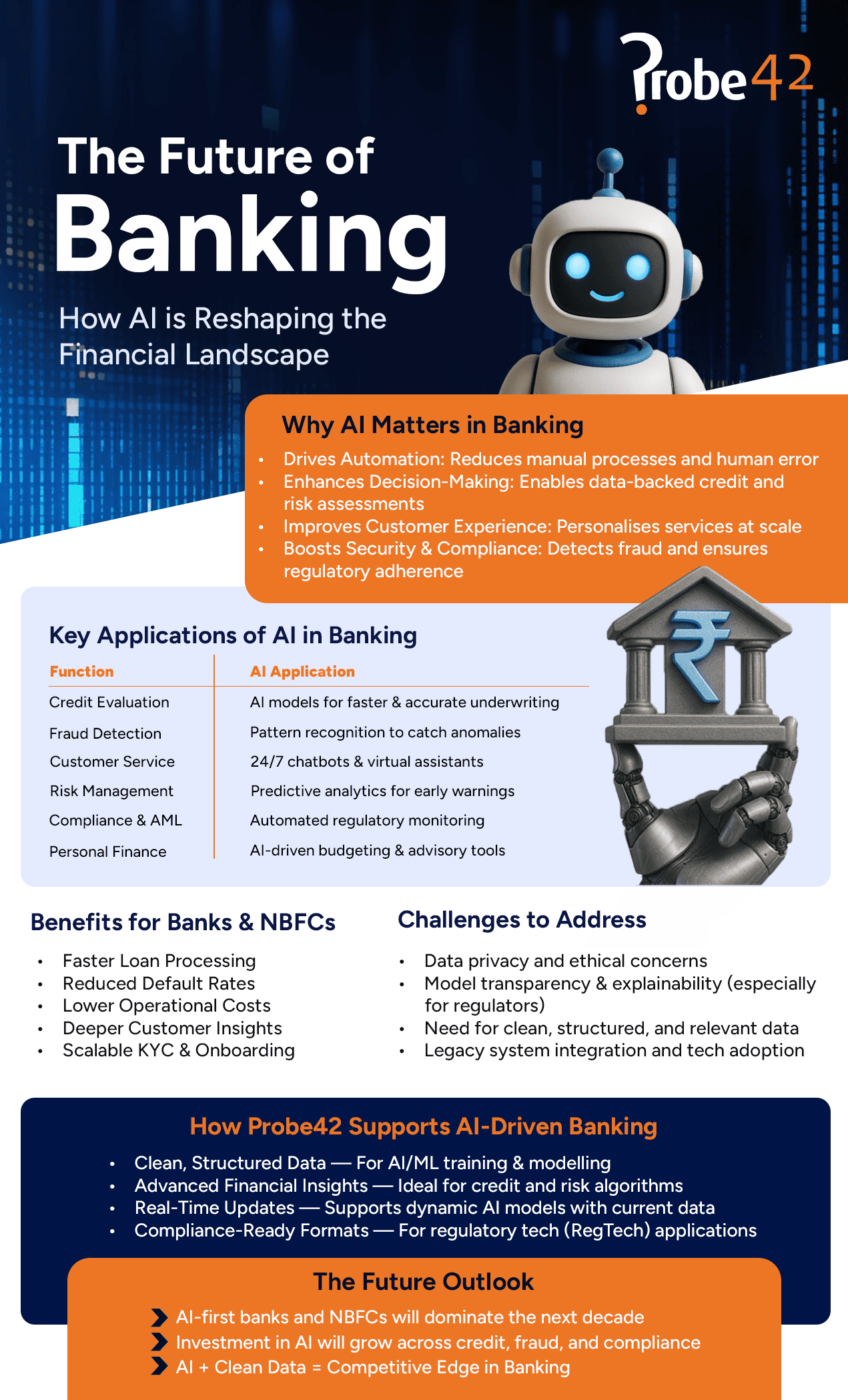
The Future of AI in Banking
As AI technologies continue to evolve, their applications in banking will expand. One promising area is the use of AI in blockchain and cryptocurrency transactions. AI can enhance the security and efficiency of these transactions, making them more accessible and reliable for consumers.
Another emerging trend is the integration of AI with the Internet of Things (IoT). IoT devices generate vast amounts of data that AI can analyze to provide deeper insights into customer behavior and preferences. This integration will enable banks to offer even more personalized services and create innovative financial products.
Moreover, AI’s role in enhancing financial inclusion cannot be overlooked. By providing more accurate credit assessments and tailored financial products, AI can help bring banking services to underserved populations. This will not only drive growth for banks but also contribute to global economic development.
The journey of AI in banking is just beginning, and its potential to revolutionize the industry is immense. Embracing this technology will be crucial for banks to stay competitive and meet the evolving needs of their customers in the digital age.
Probe42 AI – The Future of Market Intelligence in India
Probe42 is a comprehensive platform that aggregates and integrates data from 740+ public sources to provide detailed insights into approximately 2 million registered companies in India. Launched in 2015, it aims to enhance the efficiency, cost-effectiveness, and accessibility of business information, particularly for unlisted companies. The platform offers valuable data on company registrations, loans, and financial health, including a unique Probe Score that assesses a company’s financial stability.
Probe42 serves a variety of users, from bankers and business professionals to financial institutions, facilitating better decision-making through reliable and up-to-date company information. Its services are crucial for compliance, credit risk assessment, and strategic business planning. With a focus on quality, speed, cost efficiency, and ease of access, Probe42 continues to be a pivotal tool in navigating India’s complex corporate landscape. Converse with Probe42 AI to know more about the benefits of Probe here.
